
2346 views||Release time: Mar 06, 2026
The integration of Large Language Models (LLMs) like ChatGPT, Claude, and Gemini into the academic workflow has fundamentally changed how research is drafted. However, submitting AI-generated text to peer-reviewed venues introduces complex ethical, legal, and scientific challenges.
To maintain the integrity of its digital library, IEEE has established definitive policies regarding the use of generative AI in conference proceedings and journal submissions. If you are preparing a manuscript for a 2026 IEEE event, you must strictly adhere to these guidelines to avoid desk rejection or future retraction.
Here is the comprehensive breakdown of what is allowed, what is prohibited, and how you must disclose your use of AI.
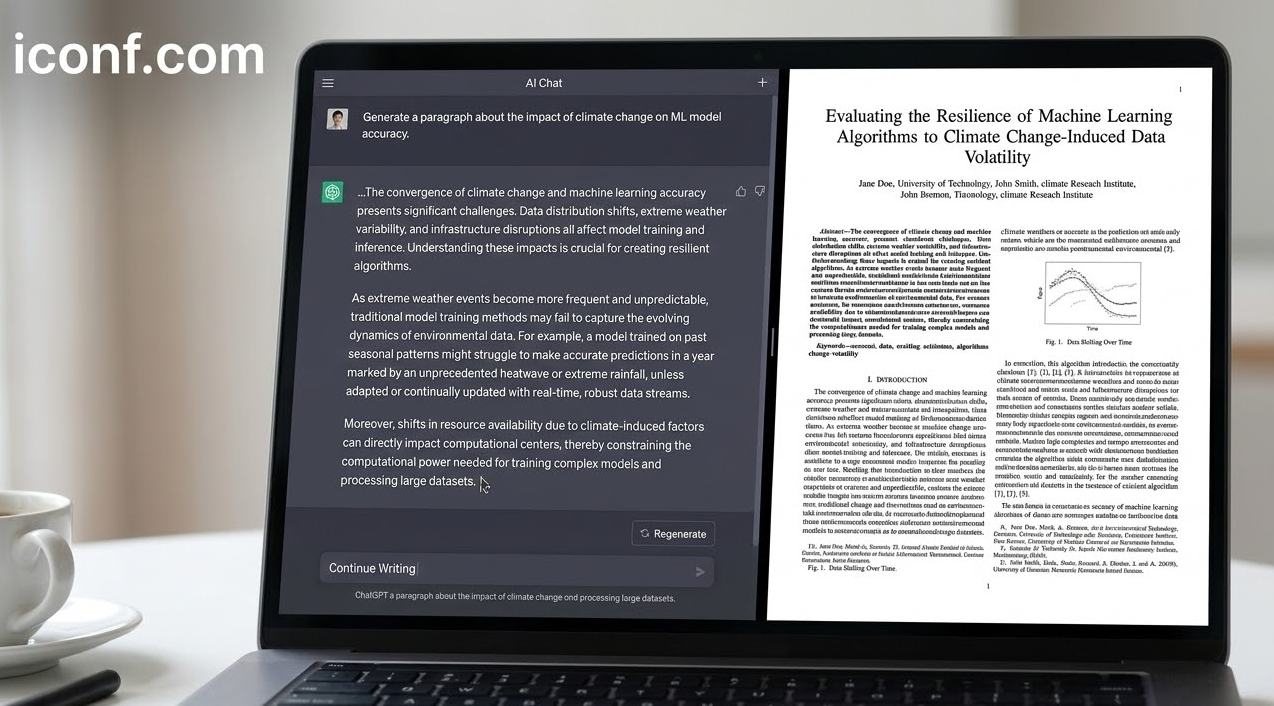
The most fundamental rule in IEEE's policy is regarding attribution. An AI system cannot be listed as a co-author on any IEEE paper.
Authorship implies accountability. An author must be able to defend the scientific validity of the paper, consent to copyright transfer agreements, and take moral and legal responsibility for the work. Because AI tools are software algorithms with no legal standing, they cannot fulfill these requirements. Only human beings can hold authorship.
IEEE permits the use of AI tools to assist in the writing process, but transparency is mandatory. If you use generative AI to draft substantial portions of text, summarize literature, or write code, you must explicitly disclose this in your manuscript.
How to Disclose: The disclosure is typically placed in the Acknowledgments section of the paper, or in a dedicated "AI Usage" section if the specific conference template requires it.
Standard Disclosure Example:
"The authors utilized [Name of AI Tool, e.g., ChatGPT-4] to [specify the exact use, e.g., draft the initial literature review summary / translate the manuscript into English]. After using this tool, the authors rigorously reviewed, edited, and verified all content and take full responsibility for the final publication."
Note: Using tools purely for basic grammar checking or spell-checking (like Grammarly or Microsoft Word's built-in editor) generally does not require formal disclosure.
Understanding the line between "assistance" and "academic misconduct" is critical.
Allowed Uses (The "Assistant" Role):
Language Polish: Translating a manuscript from your native language into academic English.
Grammar and Flow: Restructuring awkward sentences to improve readability and conciseness.
Outlining: Using AI to generate structural outlines or brainstorm section headings before you begin writing.
Formatting: Asking an AI to format your raw citation list into proper IEEE reference style.
Prohibited Uses (The "Scientist" Role):
Generating Novel Scientific Claims: AI cannot be used to invent hypotheses or fabricate experimental data.
Unverified Literature Reviews: You cannot ask an AI to "write a background section on quantum cryptography" and paste it blindly. AI models frequently suffer from "hallucinations," meaning they will invent fake papers, fake authors, and fake DOI numbers.
Plagiarizing Existing Work: If the AI generates text that is heavily lifted from a copyrighted source without proper citation, it is treated as plagiarism.
This is the most critical aspect of the 2026 IEEE policy: The human authors are 100% accountable for every word, chart, and citation in the paper.
If you use ChatGPT to write a section of your paper, and the AI inadvertently plagiarizes another researcher's work, the peer-review committee will not accept "The AI wrote it" as an excuse.
If an AI-generated hallucination or plagiarized section is caught by the IEEE CrossCheck system (or worse, caught by a reader after publication), the human authors will face the standard penalties for academic misconduct. This can include immediate rejection, formal retraction notices, and potential bans from submitting to future IEEE conferences.
Generative AI is a powerful tool for polishing and refining your manuscript, particularly for non-native English speakers. However, it cannot replace the scientific rigor of a human researcher. Treat AI as a highly capable copyeditor, not as a co-researcher. Always verify your facts, manually check every citation, and transparently disclose your digital tools.

