
990 views||Release time: Mar 04, 2026
Before a manuscript reaches the peer-review committee at an IEEE event, it must pass a strict, automated plagiarism check. IEEE utilizes the CrossCheck system (powered by iThenticate) to scan every submitted paper against a massive database of previously published works, websites, and institutional repositories.
If your similarity score is too high, your paper will face an immediate desk rejection. Understanding the exact thresholds IEEE uses is critical for a successful submission.
Here is a detailed breakdown of the acceptable plagiarism rates and how to ensure your manuscript complies with IEEE publishing standards.
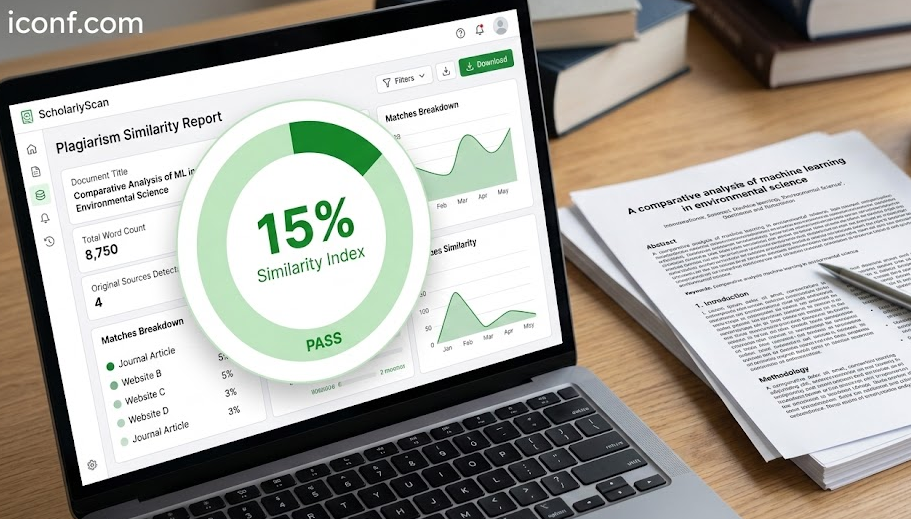
The Overall Similarity Threshold
While individual conference committees have some discretion, IEEE has established strict baseline guidelines for overall similarity.
The Critical Single-Source Limit
Many authors focus entirely on the overall percentage and fail to realize that the composition of that score matters just as much.
IEEE enforces a strict Single-Source Rule. Even if your overall similarity score is a perfectly safe 15%, your paper will still be rejected if 10% of that matched text comes from a single previously published article or website.
As a general industry standard, no single source should account for more than 5% of your total similarity score. A high match from a single source implies that a massive, continuous chunk of text was copied directly, rather than synthesizing multiple sources into your own original thought.
Navigating Self-Plagiarism
The most frequent reason experienced researchers fail the IEEE CrossCheck is self-plagiarism.
If you copy and paste the methodology section from a paper you published two years ago, the system will flag it as a match. IEEE scans its own digital library (IEEE Xplore) rigorously. Even though you wrote the original words, reusing them without proper citation is an ethical violation. If you are expanding a previous conference abstract into a full paper, you must completely rewrite the text or clearly cite your own previous work.
Best Practices for Lowering Your Score
If you run a draft check and find your score is dangerously close to the limit, take these steps to refine your manuscript:

Submission Deadline: Oct 30, 2026
Jan 15-Jan 18, 2027
Japan