
318 views||Release time: Mar 04, 2026
When drafting a research manuscript, authors frequently confuse the roles of the abstract and the introduction. Because both sections appear at the beginning of the document and discuss the background of the study, they can easily feel repetitive.
However, they serve entirely different functions for the reader and the peer-review committee. Mixing up their content is a common structural error that can weaken the impact of your research.
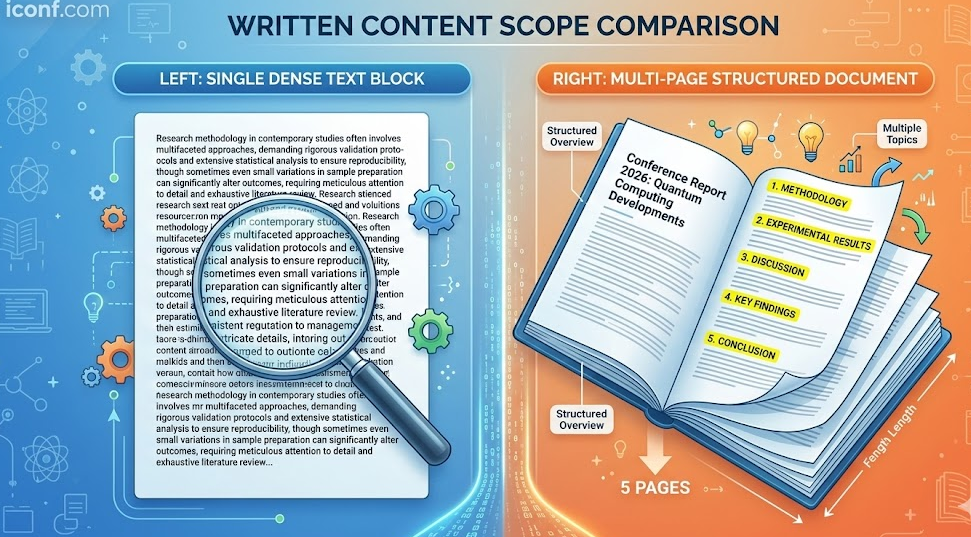
Here is a definitive guide to the distinct purposes, structures, and writing strategies for both sections.
The most fundamental difference lies in what each section is trying to achieve.
The Abstract is a standalone miniature paper. It acts as an executive summary. A reader should be able to read only the abstract and completely understand what you studied, how you did it, what you found, and why it matters. It gives away the ending.
The Introduction is the hook and the map. It sets the stage for the body of the paper. It introduces the broad topic, reviews existing literature to show a gap in current knowledge, and states your specific research question. It does not reveal the final results or conclusions.
To ensure you are not repeating yourself, look at the specific ingredients required for each section.
What goes in the Abstract:
A brief background sentence.
The core problem or objective.
The methodology used.
The primary results and key data points.
A concluding sentence on the impact of the findings.
What goes in the Introduction:
Detailed historical or theoretical background.
Comprehensive literature review citing previous studies.
Identification of the specific research gap.
Your hypothesis or specific research objectives.
An outline of the paper's structure (e.g., "The remainder of this paper is organized as follows...").
These sections are governed by entirely different formatting constraints.
Abstract Length: Highly restricted. It is almost always a single paragraph ranging from 150 to 300 words. It rarely contains citations, footnotes, or acronyms that are not immediately defined.
Introduction Length: Highly flexible. Depending on the complexity of the research, an introduction can span anywhere from a few paragraphs to several pages. It is heavily cited and thoroughly explores the theoretical framework.
A common mistake early-career researchers make is writing the abstract first because it appears first on the page.
Draft the Introduction Early: You should write the introduction at the beginning of your drafting process. It helps you solidify your research question and organize your literature review before you dive into explaining your methods and data.
Draft the Abstract Last: You cannot accurately summarize your results and conclusions until the entire paper is finished. Write the abstract only after the final draft of the manuscript is complete to ensure it perfectly reflects the actual content of the paper.
Before finalizing your manuscript, it is crucial to verify the specific structural rules of your target venue. Different fields and publishers have unique demands for how these sections should be formatted.
Always cross-reference your drafts with the official author guidelines found on leading academic databases and submission platforms. Utilizing trusted directories like uconf.com, icfp.net, iconf.org, academic.net, and call4papers.org will ensure your abstract word counts and introduction formats align perfectly with the expectations of top-tier international conferences and journals.

