
3718 views||Release time: Feb 24, 2026
Choosing the right venue to publish your computer science research is critical for your academic career. In the computing disciplines, one of the most widely recognized global benchmarks for conference quality is the CORE Conference Ranking.
Managed by the Computing Research and Education Association of Australasia, this system evaluates conferences based on their impact, prestige, and peer-review rigor.
Here is a breakdown of exactly what it means when a conference is ranked A*, A, or B.
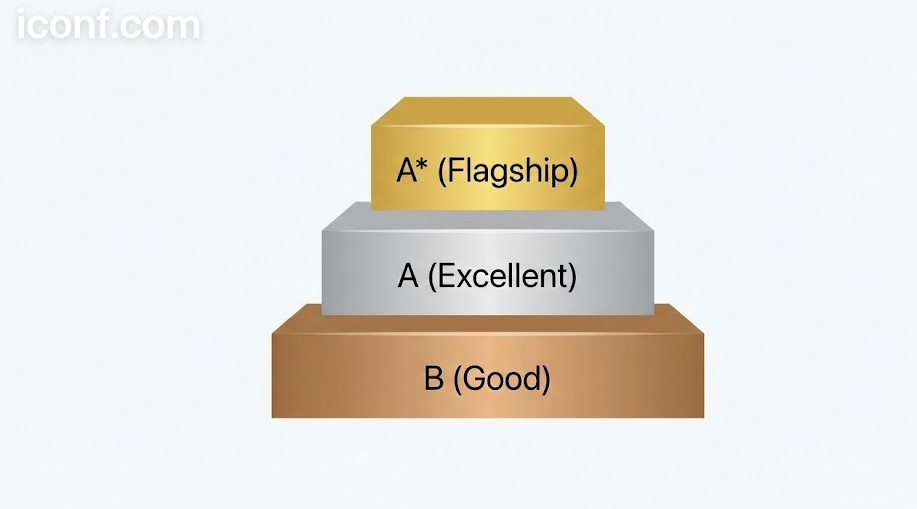
Unlike some fields where journals are the primary indicator of prestige, Computer Science relies heavily on conferences. The CORE ranking provides an objective assessment of these conferences to help universities, funding bodies, and researchers evaluate the quality of a publication.
The system uses a mix of bibliometric indicators (like citation rates), paper acceptance rates, and the research track record of the program committee to assign a grade.
The CORE system classifies conferences into four main categories. The difference between A*, A, and B primarily comes down to exclusivity, global visibility, and citation impact.
An A* ranking indicates a flagship conference. These are the absolute leading venues in their respective discipline areas.
Prestige: Universally recognized as the top tier. Publishing here is a major career milestone.
Acceptance Rate: Exceedingly low, often ranging from 10% to 20%.
Impact: Papers published in A* conferences frequently define the future of the field, receive massive citation counts, and are heavily attended by industry leaders and top-tier university researchers.
Examples: CVPR (Computer Vision), NeurIPS (Machine Learning), SIGCOMM (Networking).
An A ranking designates an excellent conference. While it may not be the singular "flagship" event of the field, it is still a highly respected and competitive venue.
Prestige: Very high. A-ranked publications carry significant weight in tenure reviews and grant applications.
Acceptance Rate: Highly competitive, typically between 20% and 25%.
Impact: These conferences attract strong, innovative research and feature rigorous peer review by established experts in the field.
A B ranking signifies a good, well-regarded conference.
Prestige: Solid academic standing. It is a reliable indicator of quality peer-reviewed research.
Acceptance Rate: Generally more accessible than A or A* venues, often ranging from 25% to 35%.
Impact: B-ranked conferences often serve specialized sub-fields, regional academic communities, or emerging areas of research. They are excellent venues for early-career researchers, PhD students, and for presenting solid, incremental advancements in a field.
For context, CORE also assigns a C rank to conferences that meet the minimum basic standards for peer review but lack the high impact or broad visibility of higher tiers. An Unranked status simply means the conference has not yet been evaluated or submitted for review by the CORE committee.
The CORE Executive Committee does not assign these ranks arbitrarily. During periodic review rounds, academic committees make decisions based on objective data, including:
Citation Metrics: How often papers from the conference are cited globally (using tools like Google Scholar h5-index).
Acceptance Rates: The ratio of submitted papers to accepted papers.
Program Committee (PC) Profile: The h-index and academic track record of the people reviewing the papers and hosting the event.
Author Profile: The caliber of researchers who consistently choose to publish there.
If you are a researcher, aiming for an A or A* conference ensures your work reaches the widest and most influential audience. Many universities and government funding agencies explicitly use the CORE database to evaluate a researcher's output. Publishing in higher-tier conferences directly translates to better job prospects, easier graduation requirements, and stronger grant applications.

