
113 views||Release time: Jul 03, 2026
For data scientists and researchers, the conference circuit in Southeast Asia has become an increasingly vital hub for networking and disseminating cutting-edge research. From the rapid digitalization of Singapore to the expanding tech ecosystems in Malaysia, Indonesia, and Vietnam, the region is now home to numerous high-impact conferences.
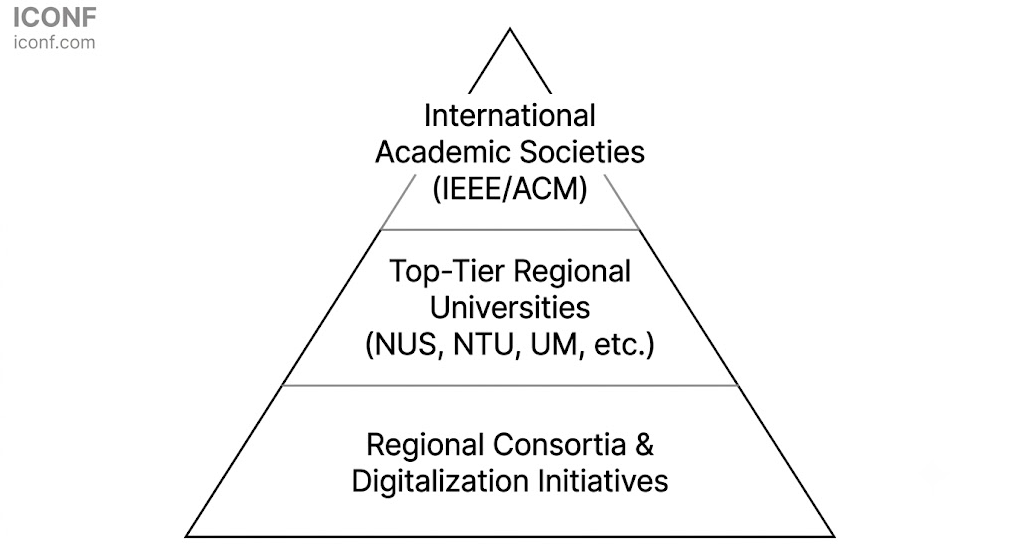
However, distinguishing between legitimate, peer-reviewed venues and lower-quality events requires understanding who is behind the hosting architecture. Credible big data conferences are almost always hosted by established academic societies, top-tier research universities, or regional science consortia.
The most reputable conferences in Southeast Asia are hosted or technically co-sponsored by international academic bodies. These hosts ensure a standardized peer-review process, formal proceedings (ISBN/DOI issuance), and indexing in major databases like EI Compendex and Scopus.
IEEE Computer Society & Technical Committees: IEEE chapters across Southeast Asia frequently host or sponsor international conferences focused on Big Data, IoT, and Cloud Computing. These events are often characterized by rigorous submission guidelines and high-quality proceedings.
ACM Regional Chapters: The Association for Computing Machinery (ACM) maintains active chapters in Singapore and neighboring countries. ACM-sponsored conferences in the region are highly regarded for their technical rigor and focus on data mining and information retrieval.
Major research universities in Southeast Asia often act as the physical and academic hosts for international conferences. These institutions provide the requisite technical infrastructure and the academic oversight required for successful proceedings publication.
National University of Singapore (NUS) and Nanyang Technological University (NTU): Located in Singapore, these universities frequently host flagship IEEE and ACM international tracks. Conferences hosted here benefit from the university's strong collaboration with tech giants and governmental digital agencies.
Universiti Malaya (UM) and Universiti Putra Malaysia (UPM): These Malaysian institutions are active hosts for conferences focusing on intelligent systems and data analytics, often collaborating with regional technology consortia.
Universitas Indonesia (UI): Increasingly hosting regional conferences on smart cities and digital transformation, leveraging massive datasets from the country's unique developmental challenges.
Beyond pure academia, conferences on big data are sometimes hosted by regional developmental agencies or governmental digitalization initiatives. These conferences focus on applied big data—specifically regarding smart cities, public health, and e-governance.
Digital Transformation Initiatives: Various governmental agencies focused on digital infrastructure in ASEAN often partner with academic societies to host conferences. When an academic society co-hosts these events, they typically maintain a high level of academic integrity regarding peer review and proceeding publication.
To ensure your research investment is protected, apply these three vetting criteria to any conference host you encounter in Southeast Asia:
Verify Technical Sponsorship: Check if the conference has a legitimate technical sponsorship from IEEE, ACM, or Springer. These organizations enforce strict quality controls on the papers they accept for their proceedings.
Review Historical Proceedings: Use the Engineering Village or Web of Science database to search for the host's previous conference proceedings. Verify that the papers are not only indexed but also consistently published by the same reputable academic publisher.
Analyze the Technical Committee: A credible host will list its organizing and program committee members on the website. Verify that these individuals have actual academic profiles, active research tracks, and are affiliated with recognized universities or research laboratories.
By aligning your submissions with conferences backed by these credible entities, you ensure that your research contributions gain visibility within the global data science community and receive the necessary recognition for career advancement.

