
659 views||Release time: Mar 16, 2026
Many researchers mistakenly view poster sessions as the "consolation prize" of an academic conference. In reality, poster sessions are the most high-value networking environments of the entire event.
During an oral presentation, you speak at an audience in a dark room. During a poster session, you speak with experts eye-to-eye, answering specific questions and building immediate professional rapport. However, standing in front of a 48x36-inch board for two hours requires a very specific presentation strategy.
Here is how to effectively present your research poster, engage your audience, and maximize your networking potential.
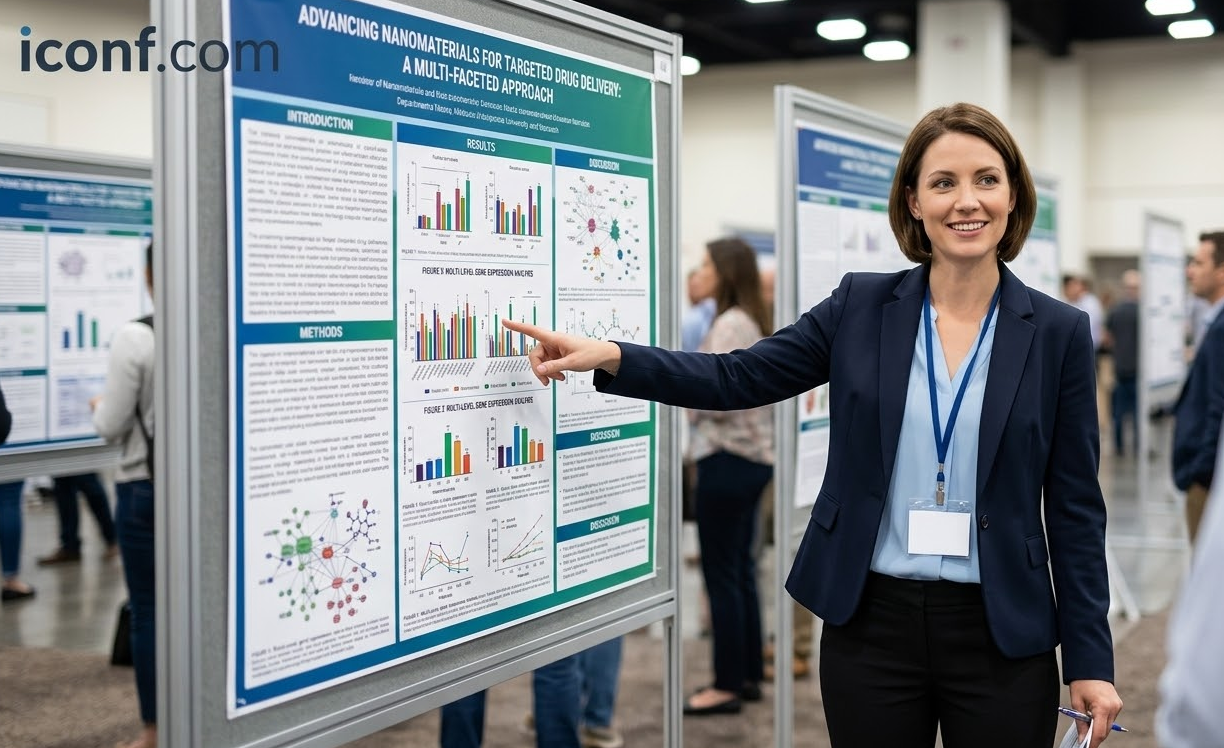
When an attendee stops at your poster, they do not want to stand in silence for five minutes reading it top-to-bottom. They want you to guide them.
You must prepare a concise, 60-second verbal summary of your entire project. This pitch should follow a strict narrative arc:
The Problem: "In our field, we currently struggle with [Problem]."
The Gap: "Previous studies have tried [Method X], but it fails because of [Limitation]."
Your Solution: "My research introduces [Your Method/Intervention] to solve this."
The Core Result: "As you can see right here in this central chart, our approach improved efficiency by 15%."
Once you deliver this one-minute summary, stop talking. Let the attendee digest the information and ask a follow-up question.
How you stand next to your poster dictates how many people will approach you. If you look closed off, attendees will simply walk past your board.
Never Block the Data: Stand to the side of your poster, not directly in front of it.
The Open Stance: Angle your body outward toward the aisle, keeping your shoulders open. Do not cross your arms or stare down at your phone.
The Proactive Hook: When someone slows down and makes eye contact with your board, do not wait for them to speak first. Smile and offer a low-pressure invitation: "Hi there, would you like a quick two-minute walkthrough of the data?" ## 3. Use the Poster as a Visual Prop
Your poster is a visual aid, not a script. When you are explaining your findings, actively use the board to ground your narrative.
Point with Purpose: When mentioning a specific metric or outcome, physically point to the corresponding bar chart or graph. This draws the listener's eyes exactly where you want them.
Skip the Bullet Points: Do not read the text blocks out loud. The attendee can read faster than you can speak. Focus entirely on explaining the visual elements—the graphs, the microscopy images, or the workflow diagrams.
The people walking through a poster hall have varying levels of expertise. You must quickly gauge their background and adapt your vocabulary on the fly.
The Expert: If they immediately ask a highly technical question about your methodology, you can drop the introductory pitch and dive straight into the deep science.
The Outsider: If they are from a different sub-field, avoid dense jargon. Focus on the broad implications of your findings and why the research matters to the industry as a whole.
The ultimate goal of a poster presentation is to build your academic network. Do not let a great conversation end without a way to follow up.
Have Digital Handouts: Print a QR code on the bottom corner of your poster that links to a downloadable PDF of the poster itself, your full paper, or your lab's website.
Exchange Information: If someone asks a question you cannot fully answer, or if they offer a brilliant insight, say: "That is an excellent point that we want to explore in the next phase. Do you have a card? I would love to email you when we run that specific test."
Follow Up Quickly: Within 48 hours of the conference ending, email the people you connected with. Reference your specific conversation at the poster board to jog their memory.

