
424 views||Release time: Feb 27, 2026
The academic landscape has permanently evolved. While fully virtual events dominated the early 2020s and traditional in-person gatherings made a strong return, the Hybrid Conference has emerged as the gold standard for 2026.
A hybrid conference simultaneously offers a physical, on-site event and a robust, interactive digital platform. For researchers, academics, and industry professionals sourcing events on directories like uconf.com or call4papers.org, choosing the hybrid track provides distinct strategic advantages.
Here is a detailed breakdown of why attending a hybrid conference maximizes your academic and professional return on investment.
The primary benefit of a hybrid conference is the absolute flexibility it provides regarding physical logistics.
Navigating international travel for the first time can be highly unpredictable. For example, if you are planning a late March business trip to a major international hub like Yokohama, you may encounter unexpected flight delays, visa processing hurdles, or jet lag. The hybrid format acts as a built-in insurance policy.
If a logistical issue prevents you from arriving at the physical venue on time, you do not lose your registration fee or your publication slot. You can seamlessly switch your status to a "Virtual Presenter" and deliver your research from your hotel room or home office without academic penalty.
Securing travel funding from university departments or government grants is increasingly competitive. Hybrid conferences allow you to tailor your attendance to your current financial reality.
High-Budget Years: When fully funded, you can purchase the in-person ticket to maximize face-to-face networking, gala dinners, and hands-on workshops.
Low-Budget Years: When grant money is tight, you can select the virtual tier. This eliminates the cost of international flights, multi-night hotel stays, and daily per diems, while still securing the crucial Scopus or EI Compendex indexing for your paper.
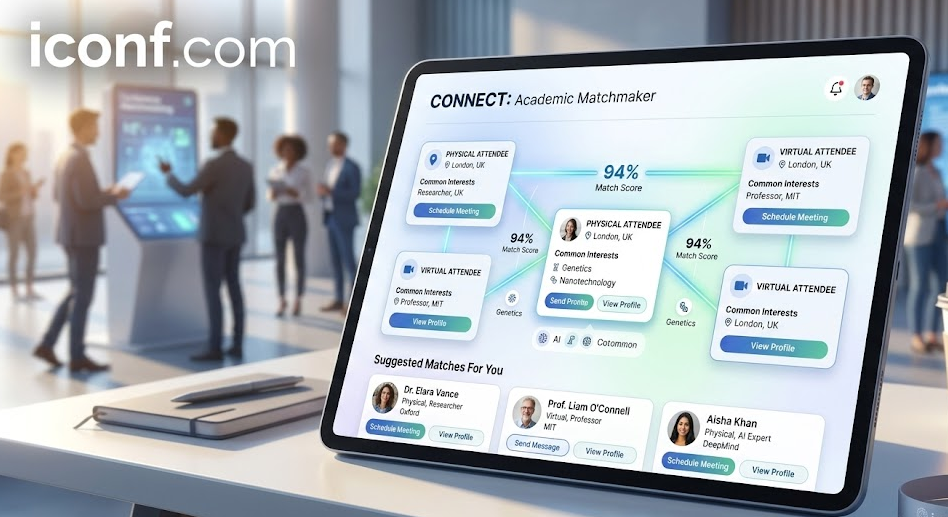
Historically, if you did not speak to a researcher in the hallway after their presentation, the connection was lost. Hybrid conferences in 2026 utilize advanced event platforms that bridge the gap between physical and digital attendees.
Persistent Profiles: Your attendee profile remains active before, during, and after the event.
AI Matchmaking: Many modern conference platforms integrate AI models to analyze your submitted abstract and automatically suggest networking connections with researchers exploring similar methodologies, whether they are sitting in the auditorium or watching from another continent.
Digital Lead Capture: For professionals operating in the B2B or academic service sectors, digital platforms allow for frictionless sharing of contact information and portfolios.
At a traditional physical conference, organizers often schedule multiple presentation tracks concurrently. If "Track A" and "Track B" feature highly relevant papers at the exact same time, you are forced to miss one.
Hybrid conferences solve the "fear of missing out" (FOMO). Because the event is being broadcasted for virtual attendees, every session is recorded. As a registered attendee, you generally receive 30 to 90 days of on-demand access to the entire video library. You can attend Track A in person, and watch Track B on your laptop the following week.
When you present at a hybrid conference, your audience is not limited to the physical capacity of the lecture hall.
Researchers from developing nations or institutions with strict travel restrictions can attend virtually. This means your data, your methodologies, and your presentation are exposed to a vastly wider, truly global demographic. This increased visibility directly correlates to higher citation rates for your published proceedings.
Choosing a hybrid conference in 2026 removes the logistical anxiety of academic publishing. It empowers you to control your budget, safeguards against international travel disruptions, and ensures your research reaches the largest possible audience through integrated digital platforms.

