
1317 views||Release time: Jan 13, 2026
Publishing a research paper is the currency of academia. However, in 2026, the landscape has shifted. With the rise of AI writing assistants, Open Access mandates, and Data Availability Statements, the "old ways" of submitting a paper are no longer sufficient.
Whether you are a PhD student submitting your first article or a senior researcher adapting to the new digital workflows, this guide covers the entire lifecycle of a scientific paper.
Rejection often happens not because the science is bad, but because the "Scope" is wrong.
Check the "Aims & Scope": Does the journal publish applied engineering or theoretical math?
Check Indexing: Is it in Scopus, Web of Science (SCIE/SSCI), or Ei Compendex? (Crucial for graduation).
Check Speed: Use tools like Elsevier Journal Finder or Springer Suggester to see the "Average time to First Decision."
Disclosure is Mandatory: Most journals (Nature, Science, IEEE, Elsevier) now require a statement if you used AI (like ChatGPT or Claude) for editing or brainstorming.
The Golden Rule: AI can be an editor, but never an author. You are responsible for every word.
Download First: Never write in a blank Word doc. Download the specific LaTeX or Word template from the journal’s website.
Figures: Ensure images are 300 DPI (TIFF/EPS). Blurry images are an instant "Return to Author."
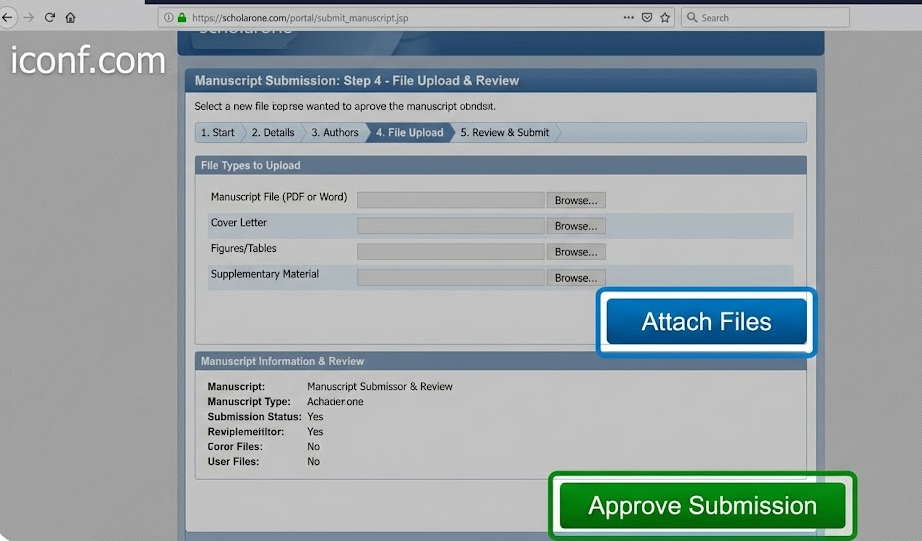
Most journals use ScholarOne Manuscripts, Editorial Manager, or OpenReview (for CS conferences).
This is your sales pitch to the Editor-in-Chief.
Do: innovative findings, real-world impact.
Don't: "Please publish my paper, thank you."
Key Phrase: "This manuscript has not been published and is not under consideration elsewhere."
Strategy: Suggest 3-5 experts who are knowledgeable but not your close friends.
Avoid: Anyone from your own institution (Conflict of Interest).
In 2026, you cannot simply say "Data available on request." You must usually:
Upload data to a public repository (GitHub, Zenodo, Figshare).
Provide the DOI link in the manuscript.
After 1-4 months, you will receive a decision.
| Decision | Meaning | Action |
| Desk Reject | Rejected by Editor (no review). | Fix formatting/scope, submit to a different journal immediately. |
| Major Revision | "Soft Reject." Needs new experiments or major rewrites. | Do it. This is a chance. You have a ~60% chance of acceptance if you work hard. |
| Minor Revision | "Soft Accept." Needs clarity or text fixes. | Celebrate. You are 95% there. Fix it within 1 week. |
| Accept | Straight in. | Extremely rare (top 1%). |
Be Polite: Even if Reviewer #2 is rude, you must be professional. "We thank the reviewer for this insightful comment."
Point-by-Point: Copy every single reviewer comment and write your response below it in a different color.
Evidence: Don't just argue; show where you changed the text (e.g., "See Page 4, Line 12").
You will receive a PDF of how the paper will look in print.
Check Carefully: Author names, affiliations, and formulas.
Warning: This is usually your last chance to fix typos.
Open Access (OA): You pay an APC (Article Processing Charge), and the paper is free for everyone. You usually keep the copyright (CC-BY).
Subscription: Free to publish, but readers pay. You sign the copyright over to the publisher.
Altmetrics: Share your DOI link on Twitter (X), LinkedIn, and ResearchGate.
Video Abstract: Many top journals now encourage a 1-minute video summary to boost citations.

