
902 views||Release time: Dec 05, 2025
For a modern researcher, information overload is a real problem. With over 10,000 academic conferences held globally every year, finding the one event that perfectly matches your research topic—and fits your schedule—can feel like finding a needle in a haystack.
Worse, relying on manual searches often leads to missed "Call for Papers" (CFP) deadlines or falling victim to predatory conference spam.
This is where Conference Alerts become your most valuable research assistant. Instead of hunting for conferences, the right system brings them directly to your inbox.
This guide explains how conference alert systems work, how to filter out the noise, and which platforms offer the most reliable, verified notifications for 2026.
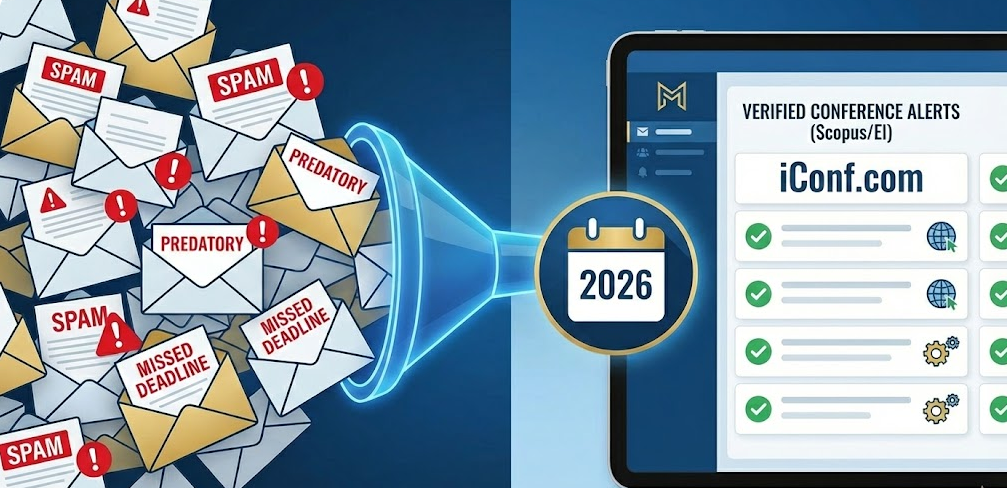
Relying on word-of-mouth or occasional Google searches is no longer sufficient. A structured alert system provides three critical advantages:
Never Miss a Deadline: Top-tier conferences often close submissions 6–8 months before the event. Alerts notify you when the CFP opens, giving you maximum time to prepare.
Filter by Indexing: You can set alerts specifically for "Scopus" or "EI Compendex" indexed events, ensuring you don't waste time on conferences that won't count toward your tenure or graduation.
Avoid Predatory Spam: By subscribing to a vetted service, you avoid the flood of "spam" emails from fake conferences that plague university inboxes.
Not all alert services are created equal. Some are just automated scrapers (high volume, low quality), while others are curated databases (high relevance, high safety).
ConferenceAlerts.com: One of the oldest players. Good for a broad overview of everything happening globally, but the sheer volume can be overwhelming, and indexing verification can sometimes be outdated.
AllConferenceAlert: Similar to the above, covering a vast array of topics from Medicine to Law. Useful for broad searches but requires careful manual verification of each result.
IEEE / ACM / Springer: If you only want to attend events sponsored by a specific society, signing up for their specific newsletters is a safe bet. However, this creates a "silo" effect—you might miss a great interdisciplinary conference simply because it wasn't sponsored by IEEE.
For researchers who prioritize quality over quantity, platforms like iConf have emerged as the modern standard. Unlike general aggregators that list everything, iConf focuses on verified, indexed events.
Why it's different: It allows you to set alerts specifically for EI Compendex and Scopus status.
The Benefit: You receive fewer emails, but every alert is a legitimate, high-value opportunity. It effectively acts as a spam filter for your academic career.
To get the most out of these services without clogging your inbox, follow this setup strategy:
Don't just subscribe to "Computer Science." You will get 50 emails a week.
Bad Keyword: "Engineering"
Good Keyword: "Renewable Energy Grid" or "Natural Language Processing"
If your institution requires Scopus indexing, look for platforms that allow you to check a "Scopus Only" box. This prevents you from getting excited about a conference in Paris, only to realize it has no publication value.
If you have a travel budget for a specific region (e.g., "Asia-Pacific" or "Europe"), set a location filter. This is excellent for finding convenient conferences in hubs like Singapore, Tokyo, or London that minimize travel costs.
If you sign up for a low-quality alert service, you might start seeing predatory behavior. Unsubscribe immediately if an alert service sends you:
"Guaranteed Acceptance" offers.
Conferences with titles that are meaningless word salads (e.g., "International Conference on Chemistry, Music, and Civil Engineering").
Deadlines that are "extended" every single week.
Your time is your most valuable resource. Stop manually searching for conferences and let the data come to you.
By setting up specific, vetted alerts on a trusted platform like iConf, you turn the chaotic landscape of global conferences into a streamlined, organized calendar of opportunities. Set your alerts today, and focus on writing your paper.

